
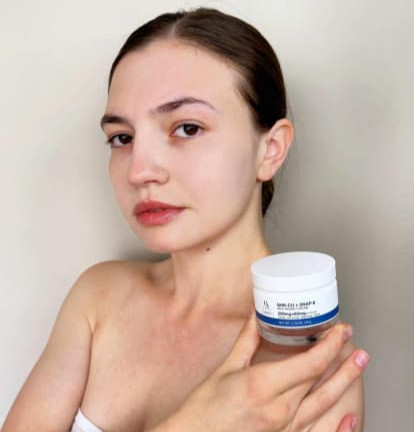
What Is SNAP-8 Peptide and How Is It Used in Skincare?
SNAP-8 peptide is the cosmetic ingredient commonly known as acetyl octapeptide-3. It is a synthetic peptide used in skincare formulas designed to address the visible appearance of expression-related fine lines.
In cosmetic science, SNAP-8 is generally discussed as a neurotransmitter-modulating peptide. Its proposed role differs from moisturizing ingredients or carrier peptides because it is associated with signaling pathways involved in repeated facial movement.
That does not mean a topical SNAP-8 cream works like an injectable treatment. Product format, concentration, supporting ingredients, delivery system, and individual skin response can all influence how a finished skincare formula performs.
Research into acetyl octapeptide-3 is still more limited than some marketing language around the ingredient may suggest. Ingredient research can explain why formulators use SNAP-8, but it should not automatically be treated as proof of every finished product's results.

What Is SNAP-8 Peptide?
SNAP-8 is commonly used as a name for acetyl octapeptide-3, a synthetic peptide made from eight amino-acid residues.
Cosmetic peptide research generally places acetyl octapeptide-3 within a group of peptides designed to influence neurotransmitter-related signaling associated with repeated facial movement.
This makes SNAP-8 different from many other peptides commonly found in skincare.
For example, copper tripeptide-1, often referred to as GHK-Cu, is usually categorized as a carrier peptide. SNAP-8 belongs to a different peptide category and is used for a different formulation purpose.
A skincare product may contain both ingredients because formulators can combine different peptide types within the same formula. CAREL, for example, combines the two ingredients within its GHK-Cu + SNAP-8 skincare collection.
| Ingredient | Common Cosmetic Identity | General Formulation Role | Important Distinction |
|---|---|---|---|
| SNAP-8 | Acetyl Octapeptide-3 | Peptide used in formulas targeting the look of expression-related lines | Ingredient evidence does not prove every finished product's results |
| GHK-Cu | Copper Tripeptide-1 | Copper-binding carrier peptide used in peptide skincare | Different peptide category from SNAP-8 |
| Sodium Hyaluronate | Hyaluronic acid salt | Supports hydration and surface smoothness | Not a peptide |
| Niacinamide | Vitamin B3 derivative | Multifunctional cosmetic ingredient | Not a peptide |
When comparing SNAP-8 skincare products, it is useful to look beyond the peptide name itself.
Consumers should also check:
-
The full ingredient list
-
The product format
-
Supporting ingredients
-
Usage directions
-
Skin compatibility
-
The type of cosmetic claims being made
This helps separate thoughtful formulation choices from products that rely mainly on a popular ingredient name.

How Does SNAP-8 Peptide Work in Skincare?
The proposed mechanism behind SNAP-8 is generally discussed in relation to neurotransmitter release.
Acetyl octapeptide-3 has been studied as a peptide designed around processes associated with the SNAP-25 complex and acetylcholine release.
In practical skincare terms, the cosmetic goal is usually to help improve the appearance of fine lines associated with repeated facial expressions.
The wording is important.
SNAP-8 should not be described as a topical version of Botox or as a replacement for injectable procedures.
A cosmetic serum or cream differs substantially from a medical injectable treatment in:
-
Delivery method
-
Concentration
-
Regulation
-
Penetration
-
Expected results
-
Clinical use
Cosmetic claims should therefore stay focused on visible appearance rather than suggesting that a topical product medically alters muscle function.
Some human research involving acetyl octapeptide-3 has been published, including studies using specialized delivery systems.
However, these studies may involve multiple active ingredients and delivery methods that differ from conventional creams and serums.
They should not be used to claim that every SNAP-8 skincare formula produces the same outcome.
Ingredient research and finished-product performance should always be treated as two separate questions.
How Is SNAP-8 Used in a Skincare Routine?
SNAP-8 is normally found as part of a finished skincare formula rather than used as an isolated ingredient by consumers.
It may appear in:
-
Facial serums
-
Moisturizers
-
Anti-aging creams
-
Eye-area products
-
Multi-peptide formulas
Consumers comparing different formats can also browse CAREL's broader anti-aging skincare collection to see how peptide ingredients are incorporated into serums and creams.
A routine containing a SNAP-8 product does not need to be complicated.
A practical approach may look like this:
-
Cleanse the skin gently.
Remove makeup, sunscreen, excess oil, and surface debris without aggressive scrubbing. -
Apply a serum if your routine includes one.
Follow the product directions rather than assuming every peptide serum should be layered in the same way. -
Apply a moisturizer or peptide cream.
A SNAP-8 cream can occupy the moisturizing step when its texture and formulation suit the user's routine. -
Use sunscreen during the day.
Daily sun protection remains important in routines focused on the visible signs of skin aging.
Introducing several unfamiliar active products at the same time can make it more difficult to identify the cause of irritation.
For sensitive or reactive skin, review the full ingredient list first and perform a patch test before adding a new product to your regular skincare routine.
This can be especially useful when the routine already contains several active ingredients.
A SNAP-8 product may also contain preservatives, fragrance, humectants, botanical extracts, or other active ingredients. Skin tolerance therefore depends on the complete formulation rather than SNAP-8 alone.

What characteristics are you looking for in the SNAP-8 peptide product?
A skincare product is not automatically better simply because SNAP-8 appears prominently on the packaging.
When comparing products, ingredient-conscious consumers can review several factors.
Check the ingredient identity
SNAP-8 may appear in ingredient information as acetyl octapeptide-3.
Knowing both names makes it easier to review ingredient information and compare formulas.
Review the complete ingredient list
The rest of the formulation matters.
Humectants, emollients, niacinamide, copper peptides, preservatives, and other ingredients can influence texture, routine fit, and skin compatibility.
Consider whether you need a serum or cream
A serum and cream can contain the same headline peptide while serving different purposes.
A serum may fit earlier in a skincare routine, while a cream may also perform the moisturizing step.
Neither format is automatically stronger.
CAREL's GHK-Cu + SNAP-8 collection includes both serum and cream formats, which provides a useful example of how the same peptide combination can be incorporated into different product types.
Look for realistic cosmetic claims
Be cautious with language suggesting:
-
Injectable-equivalent effects
-
Guaranteed wrinkle removal
-
Permanent anti-aging results
-
Medical treatment of skin aging
-
Guaranteed physiological changes
Cosmetic skincare should generally focus on how the skin looks and feels, rather than making drug-like treatment claims.
Check how the formula fits your skin
For sensitive skin, review the full ingredient list before use.
A patch test before adding the product to a regular skincare routine may also help identify obvious signs of intolerance.
People already using several active ingredients may find it easier to introduce only one unfamiliar product at a time.
Follow the manufacturer's directions
Using more product than recommended does not necessarily produce better results.
Consistency, skin tolerance, and how well the formula fits the rest of the routine are often more useful considerations.

How CAREL Uses SNAP-8 in Peptide Skincare
CAREL's official website presents the brand around peptide-focused skincare and includes SNAP-8 within its GHK-Cu product range.
According to CAREL's product information, the brand's SNAP-8 line includes both serum and cream formats:
| CAREL Product | Highlighted Ingredients | Product Format |
|---|---|---|
| GHK-Cu SNAP-8 Anti-Aging Serum | GHK-Cu, SNAP-8, Niacinamide | Serum |
| GHK-Cu SNAP-8 Anti-Aging Cream | GHK-Cu, SNAP-8, Sodium Hyaluronate | Cream |
These ingredient descriptions are brand-sourced information.
They should not be interpreted as independent clinical evidence that the finished products produce a specific result.
The two products also show why consumers should evaluate the complete formula rather than focusing only on SNAP-8.
The serum combines GHK-Cu and SNAP-8 with niacinamide, while the cream combines GHK-Cu and SNAP-8 with sodium hyaluronate.
These differences can influence where each product fits within a skincare routine.
Someone who already uses a preferred moisturizer may consider a serum format. Someone looking for a peptide-containing moisturizing step may instead consider a cream.
Consumers can compare the available formats directly within the CAREL GHK-Cu + SNAP-8 range before reviewing the complete ingredient information and directions for the individual product.
The choice should take into account:
-
Existing skincare routine
-
Texture preference
-
Skin type
-
Ingredient tolerance
-
Other active products already being used
According to the brand information supplied by CAREL, the brand launched in 2024 and focuses on peptide-based skincare.
CAREL also describes a pharmaceutical-grade manufacturing facility established in 2003 as part of the background behind its science-led skincare approach.
The brand refers to its formulation approach as PeptiFusion™ Tri-Core Technology and its broader philosophy as Four-Dimensional Skincare.
Consumers interested in the brand's formulation approach can also explore the CAREL Science Lab.
These descriptions are brand-sourced information and should not be presented as independent certification or proof of finished-product efficacy.
Individual skincare results vary.
Peptide skincare may form part of a routine focused on the visible appearance of fine lines, hydration, and overall skin condition, but it is not a substitute for medical or professional cosmetic treatments.
FAQ
Is SNAP-8 the same as acetyl octapeptide-3?
Yes. SNAP-8 is commonly used as a name for acetyl octapeptide-3, a synthetic eight-amino-acid peptide used in cosmetic formulations. It is generally discussed as a neurotransmitter-modulating cosmetic peptide. Consumers should review the complete ingredient list rather than relying only on the SNAP-8 name on the packaging.
Is SNAP-8 the same as Botox?
No. SNAP-8 is a topical cosmetic peptide, while botulinum toxin is a medical injectable treatment. They differ in delivery, regulation, concentration, and expected effects. Although SNAP-8 is sometimes compared with injectable approaches in marketing, a topical serum or cream should not be presented as delivering equivalent medical results.
Can sensitive skin use SNAP-8 peptide products?
Sensitive skin may tolerate some SNAP-8 products, but suitability depends on the complete formulation. Review the ingredient list first and perform a patch test before adding a new product to your regular routine. Fragrance, preservatives, other active ingredients, and individual sensitivity can all affect how the skin responds.
Can SNAP-8 peptide be used around the eyes?
SNAP-8 appears in skincare products designed for areas where expression lines are commonly visible, including around the eyes. Suitability still depends on the finished formula and manufacturer directions. Avoid applying a general facial product too close to the eyes unless the product is intended for that area.
How long does SNAP-8 take to work?
There is no universal timeline that applies to every SNAP-8 product. Formulations differ in peptide concentration, delivery, supporting ingredients, and recommended use. Individual responses also vary, so follow the product directions consistently and evaluate both skin tolerance and visible appearance rather than expecting an immediate or guaranteed result.
Reference Sources
-
Current Approaches in Cosmeceuticals: Peptides, Biotics and Marine Biopolymers — peer-reviewed discussion of cosmetic peptides and acetyl octapeptide-3.
-
A Framework for the Safety Evaluation of Peptides in Cosmetics — scientific discussion of cosmetic peptide safety assessment.
-
American Academy of Dermatology — skincare guidance relating to product selection, irritation, moisturizers, and sun protection.
-
U.S. Food and Drug Administration — regulatory guidance concerning cosmetic and drug claims.
-
CAREL Official Website — brand background and product information.
-
CAREL GHK-Cu + SNAP-8 Collection — brand-sourced information about SNAP-8 products.
-
CAREL Science Lab — CAREL educational and formulation content.
Đọc thêm
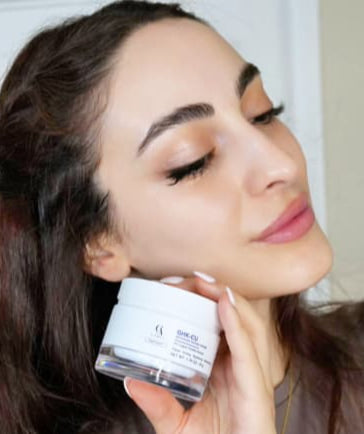
GHK-Cu serum vs cream: which fits your skincare routine? Explore differences in formulation, moisturizing needs, layering, and value. This guide compares CAREL’s GHK-Cu SNAP-8 Anti-Aging Serum and ...
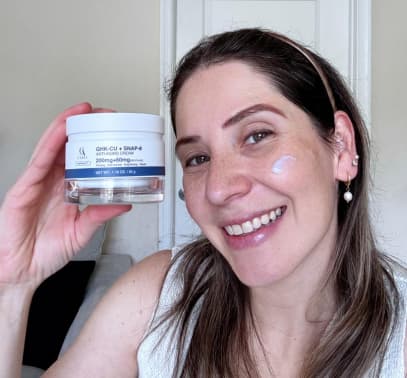
GHK-Cu and SNAP-8 together target the look of fine lines in two ways. Learn how this peptide pair works, how to use it, and which format fits your skin.
Để lại nhận xét
Trang web này được bảo vệ bằng hCaptcha. Ngoài ra, cũng áp dụng Chính sách quyền riêng tư và Điều khoản dịch vụ của hCaptcha.