
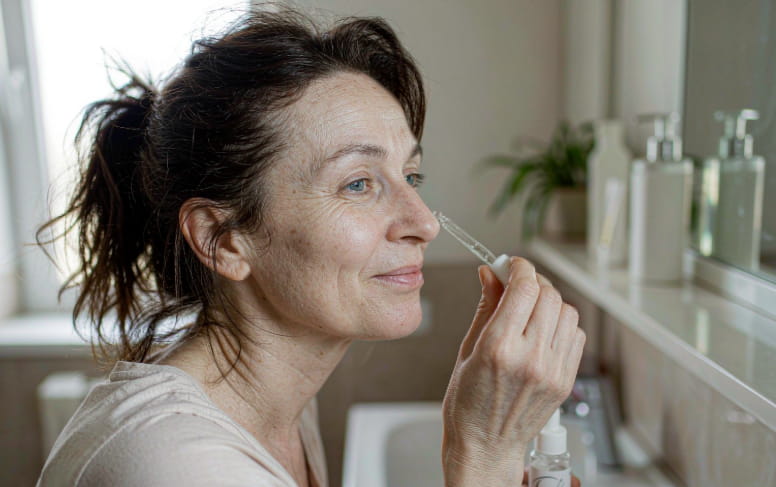
How to Use Copper Peptides in Your Skincare Routine
Apply a water-based copper peptide serum after cleansing and before moisturizer, following the product’s directions. In the morning, finish with sunscreen. If you choose a copper peptide cream, use it at the moisturizing stage instead.
GHK-Cu, commonly listed as Copper Tripeptide-1, is one copper peptide used in skincare. You may find it in a lightweight serum, a cream, or a formula combining several peptides.
Learning how to use copper peptides starts with deciding which step you want the product to fill. Keep your familiar basics, introduce one new formula, and choose a schedule that fits your existing skincare.
What Should You Know Before Using Copper Peptides?
Copper peptides are peptide–copper complexes. GHK-Cu contains a three-amino-acid peptide—glycine, histidine, and lysine—bound to copper.
Researchers have investigated GHK-Cu for skin-related biological activity and cosmetic applications. However, ingredient research does not establish how every finished serum or cream performs.
The published research on GHK-Cu provides background on the ingredient. It should not be treated as clinical proof of CAREL product results.
Decide the Role First, Then Pick the Product
Start with one question: do you want a serum to use before your existing moisturizer, or a cream to serve as the moisturizing step itself? Answering that is more useful than adding several peptide products at once.
Before buying, check the full ingredient list, the directions for use, and any available evidence on the finished product. A prominent peptide name on the label won't tell you everything about the texture, tolerance, or results.
How to Use Copper Peptides Step by Step
1. Test the product on a small area
Before full-face use, follow the American Academy of Dermatology’s guide to testing skincare products. It recommends a small test area twice daily for seven to ten days.
Choose the underside of your arm or elbow bend. Use the normal amount, observing the product’s leave-on or rinse-off instructions.
This home check may help identify a reaction, but it cannot guarantee future tolerance. Stop if irritation develops.
2. Cleanse without adding extra exfoliation
Remove makeup, sunscreen, and surface dirt with a gentle cleanser. You do not need a scrub or exfoliating toner to prepare for copper peptides.
Pat your skin gently. Follow any product-specific instruction about applying to dry or damp skin.
3. Apply the amount on the label
Use the directed amount across the intended areas. Drop sizes and concentrations vary, so a universal “three drops” rule is not reliable.
Avoid the eye area unless the product is intended for it. Apply with clean hands and avoid touching a dropper directly to your face.
4. Place serum before cream
A lightweight, water-based copper peptide serum generally goes before moisturizer. If the copper peptide product is itself a cream, place it at the moisturizing stage.
The AAD’s recommended skincare order provides a useful foundation: cleanse, apply treatment products, then moisturizer or sunscreen. Specific product directions take priority.

5. Finish daytime skincare with sunscreen
Use broad-spectrum SPF 30 or higher, choosing water resistance when appropriate. Sunscreen goes after your other skincare and before makeup.
The AAD identifies sunscreen and moisturizer as foundational anti-aging skincare products. Copper peptides are an optional addition to those basics.
Morning and Evening Copper Peptide Routines for Different Needs
Copper peptides can fit into morning or evening skincare when the product allows it. You do not need to begin with both.
The examples below show where a peptide product can fit. They are routine-planning options rather than tested combinations of particular formulas.
| Your starting point | Example routine | Main consideration |
|---|---|---|
| A simple morning routine | Cleanser → peptide serum → moisturizer → sunscreen | Follow morning-use directions |
| A simple evening routine | Cleanser → peptide serum → moisturizer | Keep the other steps familiar |
| You prefer a peptide cream | Cleanser → compatible serum, if used → peptide cream | Decide whether another moisturizer is needed |
| Dryness is your main concern | Cleanser → optional peptide serum → suitable moisturizer | Keep adequate moisturization |
| You already use retinol | Consider peptides in a separate permitted routine | Check both formulas’ instructions |
If your skin feels dry
Keep the moisturizer that already keeps your skin comfortable. Adding a copper peptide serum should not mean removing a moisturizing step your skin needs.
A serum may fit before that moisturizer. A peptide cream offers another format, but its name alone does not establish whether it suits your dryness.
For broader product research, CAREL’s hydrating and nourishing skincare collection groups products by that concern. Review individual formulas before replacing anything.
If fine lines are your main concern
Begin with consistent sun protection and moisturization. Moisturizer can soften the appearance of some fine lines associated with dryness.
Then consider whether a peptide formula fills a useful role. Judge changes gradually, keeping lighting and the rest of your routine reasonably consistent.
Do not treat an immediate hydrated appearance as proof of longer-term peptide effects. Those are different observations.
If you already use retinol or several actives
Avoid rebuilding a successful routine around a new serum. Check whether the copper peptide product can fit into a separate morning routine or alternate evening.
If your retinoid is prescribed, ask the prescriber before changing its use. An optional cosmetic should fit around the established treatment plan.
If your skin reacts easily
Introduce one new formula at a time. That makes it easier to identify a product associated with redness, itching, or burning.
A copper peptide label does not guarantee sensitive-skin suitability. Persistent irritation deserves professional advice rather than additional layers.

What Can You Layer with Copper Peptides?
Check compatibility at the finished-formula level. Two products sharing a broad ingredient category may have different usage restrictions.
Some brands advise against combining their copper peptide formulas with direct vitamin C, direct acids, or retinoids. Check your product's official guidance.
For an uncomplicated starting routine:
- Moisturizer: Keep a familiar formula and review whether it contains additional exfoliating or treatment ingredients.
- Vitamin C: If compatibility is unclear, consider separate routines; instructions for L-ascorbic acid do not automatically cover every derivative.
- Retinol: Check both labels before layering; separate routines or alternating evenings may be easier to manage.
- AHA or BHA exfoliants: Follow the manufacturers’ restrictions and avoid assuming that a short waiting period establishes compatibility.
Do not mix separate products together in your palm to create a new formula. Apply them as directed, keeping the routine simple while assessing tolerance.
How to Fit CAREL Copper Peptide Serums and Creams into Your Routine
CAREL's peptide-focused lineup includes GHK-Cu SNAP-8 and GHK-Cu Intensive Repair formulas.
| CAREL product | Highlighted ingredients |
|---|---|
| GHK-Cu SNAP-8 Anti-Aging Serum | GHK-Cu, SNAP-8, niacinamide |
| GHK-Cu SNAP-8 Anti-Aging Cream | GHK-Cu, SNAP-8, sodium hyaluronate |
| GHK-Cu Intensive Repair Serum | GHK-Cu, Pro-Xylane |
| GHK-Cu Intensive Repair Cream | GHK-Cu, Pro-Xylane |
These are brand-sourced ingredient descriptions, not a performance ranking.
If you already have a moisturizer you like, compare a serum as a possible preceding step. If you prefer fewer layers, consider whether a cream fills your moisturizing step.
Browse the CAREL GHK-Cu and SNAP-8 collection to compare available formats. Confirm each product’s texture, complete ingredients, and application instructions before selecting it.
For formulation background, read CAREL’s Scientific Foundations of PeptiFusion. Choose a product for its role in your routine; you do not automatically need matching serum and cream.
Frequently Asked Questions
Can beginners use copper peptides every day?
Beginners should follow the finished product’s stated frequency and monitor skin comfort. Daily use is not a requirement shared by every copper peptide formula. Where directions permit, introduce it gradually while keeping other products familiar, and do not increase frequency if redness, itching, or burning develops.
Should I apply copper peptides to wet or dry skin?
Follow the product’s directions about skin dampness, because copper peptide formulas differ. After cleansing, pat your face gently and apply the serum as instructed. Do not assume that damp skin improves every formula’s performance, or add an extra mist solely because the product contains peptides.
Do I need both a copper peptide serum and cream?
You do not automatically need both a copper peptide serum and cream. A serum can fit before your existing moisturizer, while a peptide cream may fill the moisturizing step. Choose the format that addresses a clear gap, rather than duplicating products simply because they belong to one range.
Can I use copper peptides with niacinamide?
Some finished products combine copper peptides and niacinamide; CAREL lists both among its SNAP-8 serum’s highlighted ingredients. That does not establish compatibility between every pair of separate serums. Check the complete formulas and directions before layering, and introduce only one unfamiliar product at a time.
How long should I use copper peptides before assessing results?
There is no universal results timeline for copper peptide skincare. Look for evidence and assessment periods relevant to your finished product, and distinguish hydration effects from other claimed changes. Individual results vary, and peptide cosmetics do not replace medical procedures or treatment for skin conditions.
Reference Sources
- AAD: How to test skin care products.
- AAD: Should I apply my skin care products in a certain order?.
- AAD: How to select anti-aging skin care products.
- Pickart and Margolina, 2018: Regenerative and Protective Actions of the GHK-Cu Peptide in the Light of the New Gene Data. Ingredient research background only.
- The Ordinary: Multi-Peptide + Copper Peptides 1% Serum. Formula-specific usage restrictions.
- CAREL official website. Brand-sourced product information.
Đọc thêm

Source: Carel Scientific Literature ReviewPrimary Review: GHK-Cu for Hair Loss: Follicle Data Reviewed, The Peptide Catalog, 2026.Scientific References: Pyo et al., 2007; Choi et al., 2012; Lee et ...
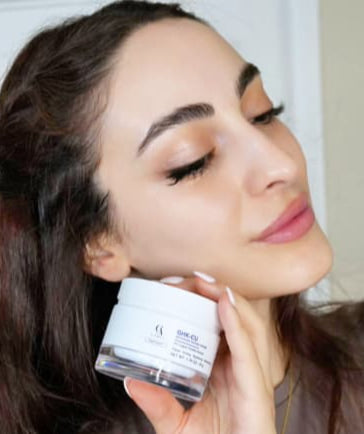
GHK-Cu serum vs cream: which fits your skincare routine? Explore differences in formulation, moisturizing needs, layering, and value. This guide compares CAREL’s GHK-Cu SNAP-8 Anti-Aging Serum and ...
Để lại nhận xét
Trang web này được bảo vệ bằng hCaptcha. Ngoài ra, cũng áp dụng Chính sách quyền riêng tư và Điều khoản dịch vụ của hCaptcha.