
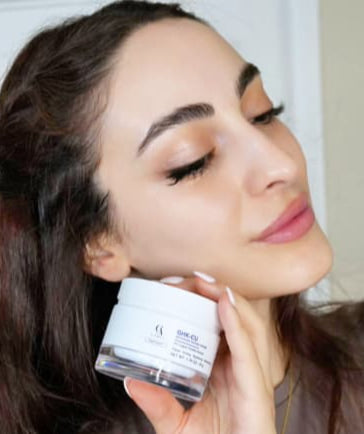
GHK-Cu Serum vs Cream: Which Should You Choose?
Choose a GHK-Cu serum if you want a separate peptide step before a moisturizer you already enjoy. Consider a GHK-Cu cream if you want copper peptides within your moisturizing step.
Neither format is automatically stronger, better absorbed, or more effective. The complete formula, your skin’s needs, and the product’s directions matter more than the words “serum” or “cream.”
When comparing GHK-Cu serum vs cream, first identify the gap in your routine. You may need an additional serum, a different moisturizer, or simply one well-chosen produc
What Is the Difference Between GHK-Cu Serum and Cream?
GHK-Cu is a copper–peptide complex commonly identified on cosmetic ingredient lists as Copper Tripeptide-1. It can be incorporated into different finished formulas.
A serum is often designed as a separate layering step. A cream generally provides a moisturizing format, although textures and supporting ingredients differ between products.
These names are useful shopping categories, not standardized measurements of peptide concentration or performance.
| Comparison point | GHK-Cu serum | GHK-Cu cream |
|---|---|---|
| Typical routine role | A separate step before moisturizer | The moisturizing step |
| Texture | May be fluid, gel-like, or an emulsion | Often a more substantial emulsion |
| Supporting ingredients | Vary by formula; inspect the full list | Vary by formula; inspect the full list |
| Skin-type suitability | Depends on the complete formula | Depends on the complete formula |
| Peptide strength | Cannot be inferred from the format | Cannot be inferred from the format |
| Evidence to request | Testing on the finished serum | Testing on the finished cream |
| Price comparison | Check size, directed amount, and additional products needed | Check size, directed amount, and whether it fills an existing step |
| Routine compatibility | Check instructions for your other products | Check instructions for your other products |
A format comparison is not always a formula comparison
Two products can differ in both their format and their ingredient combination. A serum containing GHK-Cu and SNAP-8 is not the same formula presented in a lighter bottle.
Compare the ingredient lists before attributing every difference to texture. This matters when the cream belongs to another product line or highlights different supporting ingredients.
Which Format Fits Dry, Oily, or Combination Skin?
Start with the condition of your skin and the products you already tolerate. A peptide product should fit that foundation.
Dry skin: keep the moisturizing step
If your skin feels tight after cleansing, consider your moisturizer before adding another serum. A lightweight peptide layer should not automatically replace a cream your skin needs.
The American Academy of Dermatology’s moisturizer selection guide explains why richer creams can be useful for dry skin. That supports considering a cream format, rather than endorsing any particular peptide product.
A GHK-Cu cream may be worth comparing if you want peptides in that existing step. If you prefer your current moisturizer, a separate serum offers another way to introduce the ingredient.
Oily skin: assess the entire formula
A serum may appeal when you prefer fewer rich-feeling layers. However, not every serum is oil-free, lightweight, or suitable for acne-prone skin.
Likewise, not every cream feels heavy. Review the full formula and relevant labeling rather than rejecting a product solely because it comes in a jar.
The AAD’s guidance for oily skin recommends oil-free, noncomedogenic products and notes that oily skin still needs moisturization.
Combination skin: consider where comfort differs
Your cheeks and T-zone may have different preferences. Avoid choosing your entire routine based only on the oiliest or driest area.
Think about whether your current moisturizer already accommodates those differences. Adding a serum may be easier than changing a comfortable routine.
Sensitive skin: fewer unfamiliar products at once
Neither format is universally suitable for sensitive skin. Fragrance, preservatives, other active ingredients, and individual sensitivities all influence tolerance.
Introduce one new product rather than starting a matching serum-and-cream pair together. If a reaction occurs, you will have fewer new variables to assess .Before adding either product to your daily routine, check the complete ingredient list and test it on a small patch of skin first.

Is GHK-Cu Serum Stronger or Better Absorbed Than Cream?
The word “serum” does not establish a higher GHK-Cu concentration. A fluid texture also does not prove that more intact peptide reaches its intended location.
Delivery depends on formulation design and the conditions under which it is studied. Consumer impressions of quick drying or low residue cannot establish skin penetration.
What research can tell you
An in vitro study of copper tripeptide skin penetration investigated copper retention and movement through human skin samples. This was laboratory research, not a comparison of retail serums and creams.
It cannot demonstrate that one CAREL format outperforms another. Claims about a particular product need evidence relevant to that finished formula.
When reviewing product claims, separate:
- Ingredient research: Information about GHK-Cu under specified research conditions.
- Finished-product testing: Evidence involving the actual formula being sold.
- Comparative testing: Evidence directly comparing products under appropriate conditions.
Do not assume that “tested” means all three.
How to read concentration claims
Check what a number describes: pure ingredient, a supplied ingredient blend, or an amount in the whole container. These are different measurements.
A milligram amount cannot be compared directly with a percentage without the necessary formulation information. A darker blue appearance is not a substitute for that information.
Higher concentration alone also cannot establish better cosmetic results. Look at the formula, supporting evidence, directions, and whether you can use it comfortably.
How to Choose a GHK-Cu Product for Your Existing Routine
A useful purchase starts with a specific role. Work through these steps before adding products to your cart:
- Identify the gap. Decide whether you want a peptide layer or a replacement moisturizing step.
- Keep what works. Retain a comfortable moisturizer if there is no clear reason to replace it.
- Compare formulas. Check supporting ingredients and the complete ingredient list.
- Check compatibility. Review directions for your retinoid, exfoliant, vitamin C, or other treatment products.
- Compare total cost. Include any additional moisturizer the routine still requires.
- Introduce one product. Assess tolerance before deciding whether a second peptide formula adds value.
Where each format usually fits
A simple serum routine is cleanser, serum, then moisturizer. A cream routine places the peptide cream at the moisturizing stage.
If you use both, a lightweight serum generally comes before cream. Follow the specific directions, particularly for unusual textures or prescribed treatments.
For daytime use, finish with broad-spectrum SPF 30 or higher. The AAD’s anti-aging skincare guidance places sunscreen and moisturizer at the foundation of a routine.
Compare value beyond the bottle price
A less expensive serum may still require a separate moisturizer. A cream may fill an existing step, but only if its formula suits your needs.
Compare current price, package size, directed usage, and the rest of the routine. Do not compare grams and milliliters as equivalent quantities without density information.
Before an international purchase, check destination availability, shipping charges, taxes, and the return policy. A displayed product price does not establish the final delivered cost.
Test before committing to full-face use
Follow the AAD’s instructions for testing a new skincare product. They recommend a small test area twice daily for seven to ten days.
This home check does not guarantee future tolerance. Discontinue an irritating cosmetic and seek advice if symptoms persist.

Comparing CAREL GHK-Cu SNAP-8 Serum and Cream
Our GHK-Cu SNAP-8 Anti-Aging Serum and GHK-Cu SNAP-8 Anti-Aging Cream belong to the same peptide-focused range. We recommend them as a serum-and-cream pairing for a coordinated skincare routine.
Both formulas feature GHK-Cu and SNAP-8. The serum also highlights niacinamide, while the cream highlights sodium hyaluronate.
| Comparison point | GHK-Cu SNAP-8 Anti-Aging Serum | GHK-Cu SNAP-8 Anti-Aging Cream |
|---|---|---|
| Shared highlighted peptides | GHK-Cu and SNAP-8 | GHK-Cu and SNAP-8 |
| Highlighted supporting ingredient | Niacinamide | Sodium hyaluronate |
| Routine role | A serum step before moisturizer | The moisturizing step |
| When choosing one product | You want to add peptides before your existing moisturizer | You want a peptide cream for your moisturizing step |
| When using the recommended pairing | Apply the serum first, following its directions | Follow with the cream, following its directions |
If you already have a moisturizer you enjoy, the serum may be a straightforward addition. If you want peptides within your moisturizing step, consider the cream.
For our recommended two-step pairing, apply the GHK-Cu SNAP-8 serum followed by the matching cream. Introduce each product separately and follow its directions.
Using both is an option rather than a requirement. Your choice should reflect your existing routine, skin comfort, and product preferences.
Explore our GHK-Cu and SNAP-8 skincare collection to compare the matching products.
For formulation background, read Scientific Foundations of PeptiFusion and our peptide technology explanation.
Frequently Asked Questions
Is GHK-Cu serum better than cream for fine lines?
Neither GHK-Cu serum nor cream is automatically better for fine lines. Compare the complete formulas and evidence for the finished products, then consider which format fits your routine. Individual results vary, and peptide cosmetics are not substitutes for medical procedures or treatment of skin conditions.
Can I use GHK-Cu serum and cream together?
You may use a GHK-Cu serum and cream together when their instructions permit the combination and your skin tolerates it. Introduce them separately, and usually apply a lightweight serum before cream. Using both does not establish better results, so consider whether each product fills a useful role.
Can a GHK-Cu serum replace my moisturizer?
A GHK-Cu serum should not automatically replace your moisturizer. Some serums provide hydration, but that does not establish that they meet your skin’s complete moisturizing needs. If your skin becomes tight or uncomfortable without cream, keep an appropriate moisturizer and assess whether the serum adds value.
Which GHK-Cu format should I buy first?
Buy the GHK-Cu format that fills a clear gap in your routine. Consider a serum if you already like your moisturizer, or compare creams if you want to change that step. Check the complete formula, directions, and total cost before deciding whether either option suits you.
Reference Sources
- AAD: How to pick the right moisturizer for your skin.
- AAD: How to control oily skin.
- AAD: How to select anti-aging skin care products.
- AAD: How to test skin care products.
- Hostynek, Dreher, and Maibach: Human skin retention and penetration of a copper tripeptide in vitro as function of skin layer towards anti-inflammatory therapy. Laboratory delivery research, not finished-product comparative evidence.
- CAREL official website. Brand-sourced product information.
Leer más
A simple guide to using copper peptide (GHK-Cu) skincare: how to apply it, where it fits in your routine, and tips for different skin types.
This article explains what SNAP-8 peptide is, how acetyl octapeptide-3 is used in skincare, and what consumers should consider when evaluating SNAP-8 formulas. It also covers how SNAP-8 differs fro...
Dejar un comentario
Este sitio está protegido por hCaptcha y se aplican la Política de privacidad de hCaptcha y los Términos del servicio.